
An Electric Boat Buyer's Guide: What Potential Buyers Should Look For
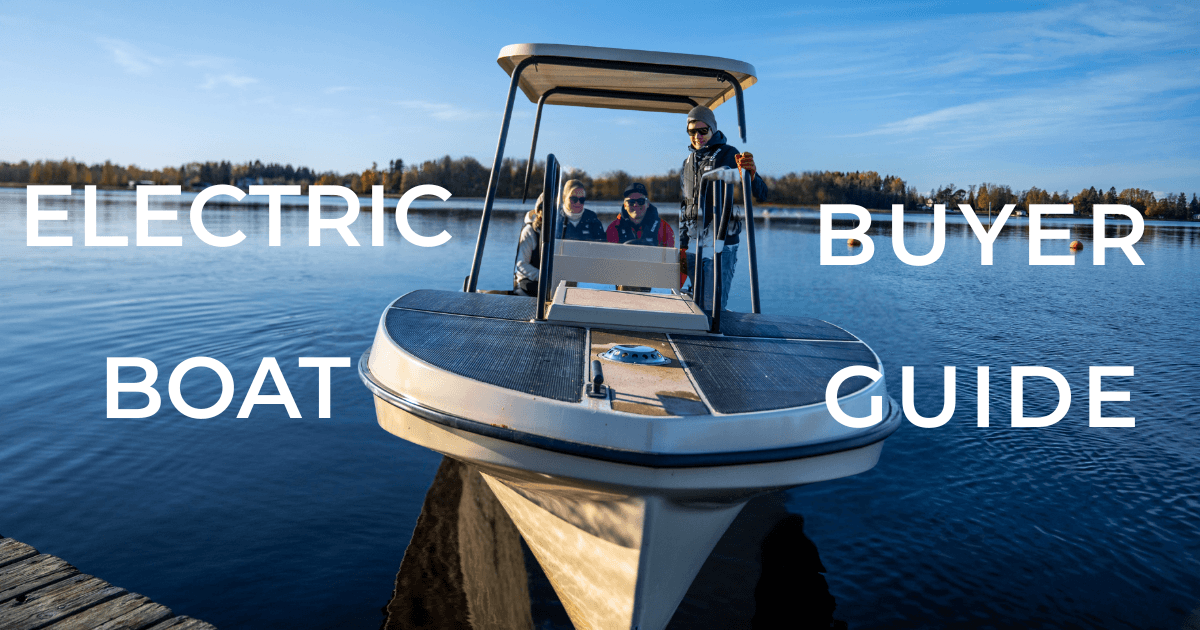
The Electric Boat Buyer's Guide: What to Know Before You Buy
At Electrified Marina, we spend our days helping people move from curiosity about electric boats to confident ownership. Along the way, the same handful of questions come up again and again — and the buyers who ask them early are the ones who end up happiest on the water. This guide walks through what genuinely matters before you buy, so your first season is spent enjoying your boat rather than working around a decision you'd make differently in hindsight.
Four considerations shape nearly every successful purchase: how far you need to travel, where you'll keep the boat, how you'll charge it, and what it will cost to own. Get these right, and the rest tends to fall into place.
Planning for Range
The most common misstep we see is shopping for range the way one shops for a fuel tank — assuming a bigger battery is always the better choice. In practice, the right answer depends entirely on how you actually use the water.
Most recreational outings last two to four hours: a relaxed cruise, an afternoon at a sandbar, a run to a waterfront restaurant, and home before dark. Today's electric boats handle that rhythm comfortably. Buyers run into trouble when they purchase for a trip they take twice a year rather than the days they enjoy most weekends.
Before comparing spec sheets, we encourage you to map your real usage. How long are you typically out, and at what speed? Electric range decreases significantly at higher speeds, so a boat that cruises all afternoon at an easy pace may offer far less time at full throttle. Neither figure is misleading — you simply need to know which one describes your boating. Plan around your normal day, keep a sensible margin, and invest in the capacity you'll genuinely use.
Making Sure the Boat Fits Your Slip
It's worth confirming a boat fits where you'll keep it before you fall in love with a particular model. Measure your slip's length and beam, and know your marina's limits up front.
An electric boat isn't dramatically different in shape from its gas equivalent, but battery packs add weight, and that has a few practical implications. Check your boat lift's rated capacity — a lift sized for a gas runabout may not be rated for the same hull carrying several hundred additional pounds of batteries. Draft is worth noting too, particularly in shallow water, since the added weight can sit the hull slightly deeper.
None of this needs to be an obstacle. It's simply far easier to confirm before delivery than to discover afterward, and it's exactly the kind of detail our team walks through with every buyer.
Charging and Electrical Requirements
This is the area that differs most from owning a gas boat, and the one we spend the most time explaining. Understanding it before you buy makes the entire ownership experience smoother.
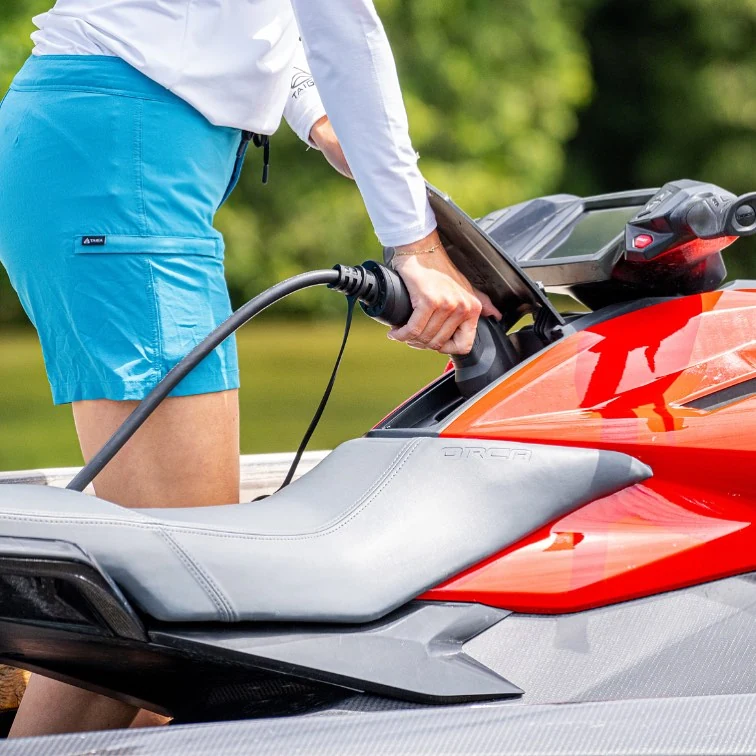
Understand your charging options. Most electric boats can charge in three ways, and they aren't equivalent:
Level 1 uses a standard 120-volt household outlet. It works, but slowly — a full charge can take overnight and then some. It's best as a backup, or for a smaller boat used lightly.
Level 2 uses a 240-volt circuit, the same type of line that powers an electric dryer or a home EV charger. For most owners, this is the practical standard: connect when you tie up, and return the next morning to a full battery.
DC fast charging delivers the quickest turnaround, topping up a boat in a fraction of the time. However, not every boat accepts it and not every dock can supply it, so confirm both the vessel and your location support it if speed is a priority.
Review your dock's electrical service. This is the step buyers most often overlook. A slip may only offer a 30-amp or 50-amp shore power pedestal intended to run an onboard charger and a few appliances — not to charge a boat efficiently. Before committing, find out what's actually feeding your dock. You may need a licensed electrician to run a dedicated 240-volt line or upgrade a pedestal, and in a shared marina you may need to coordinate with management on available capacity. On a private dock, it's often a straightforward panel upgrade; in a marina, it can take a short conversation, so it's wise to start early.
Budget for the charging setup alongside the boat. A proper Level 2 installation can range from a few hundred to a couple thousand dollars, depending on the distance from your electrical panel and local labor rates. It's a one-time cost, and it's the difference between a boat that's ready every morning and one that's perpetually a little low. We recommend factoring it into your purchase from the outset rather than treating it as an afterthought.
If you already own an electric vehicle, much of this will feel familiar — the logic is the same, simply relocated to the dock. If you don't, our team is glad to walk your site with you and help you plan the setup properly.
Understanding the Cost of Ownership
We believe in being straightforward about cost. An electric boat often carries a higher purchase price than a comparable gas model, a reflection of the advanced battery and motor technology involved.
The value shows up in ownership. A full charge typically costs a few dollars, compared with $80 to $150 for a day's worth of fuel on a gas boat. There's no fuel system to winterize, no oil changes, and no carburetor maintenance — an electric drivetrain has far fewer moving parts than a combustion engine, which means less to service and less that can fail. Over several seasons, lower fuel and maintenance costs can offset a meaningful portion of the higher purchase price. Whether it fully balances out depends on how often you run the boat, so it's worth running the numbers against your own hours rather than a general estimate.
Moving Forward With Confidence
Buying an electric boat becomes straightforward once you know where to focus. Match the range to how you truly boat, confirm the vessel fits your slip and lift, arrange charging before delivery rather than after, and go in with clear expectations about up-front cost versus long-term savings. Those four steps prevent nearly every mistake we see first-time buyers make.
If you'd like to go deeper before you start shopping, eboat101.com was built for exactly that — clear, straightforward answers to the questions every new electric boat buyer asks. We invite you to visit and explore.
Ready to Experience Electric Boating?
Browse our full inventory of electric boats, motors, and batteries or get in touch with our team.